Manufacturing reimagined from
first principles

[ The Technology ]

Microwire DED technology that does what forty years of metal additive manufacturing couldn't.
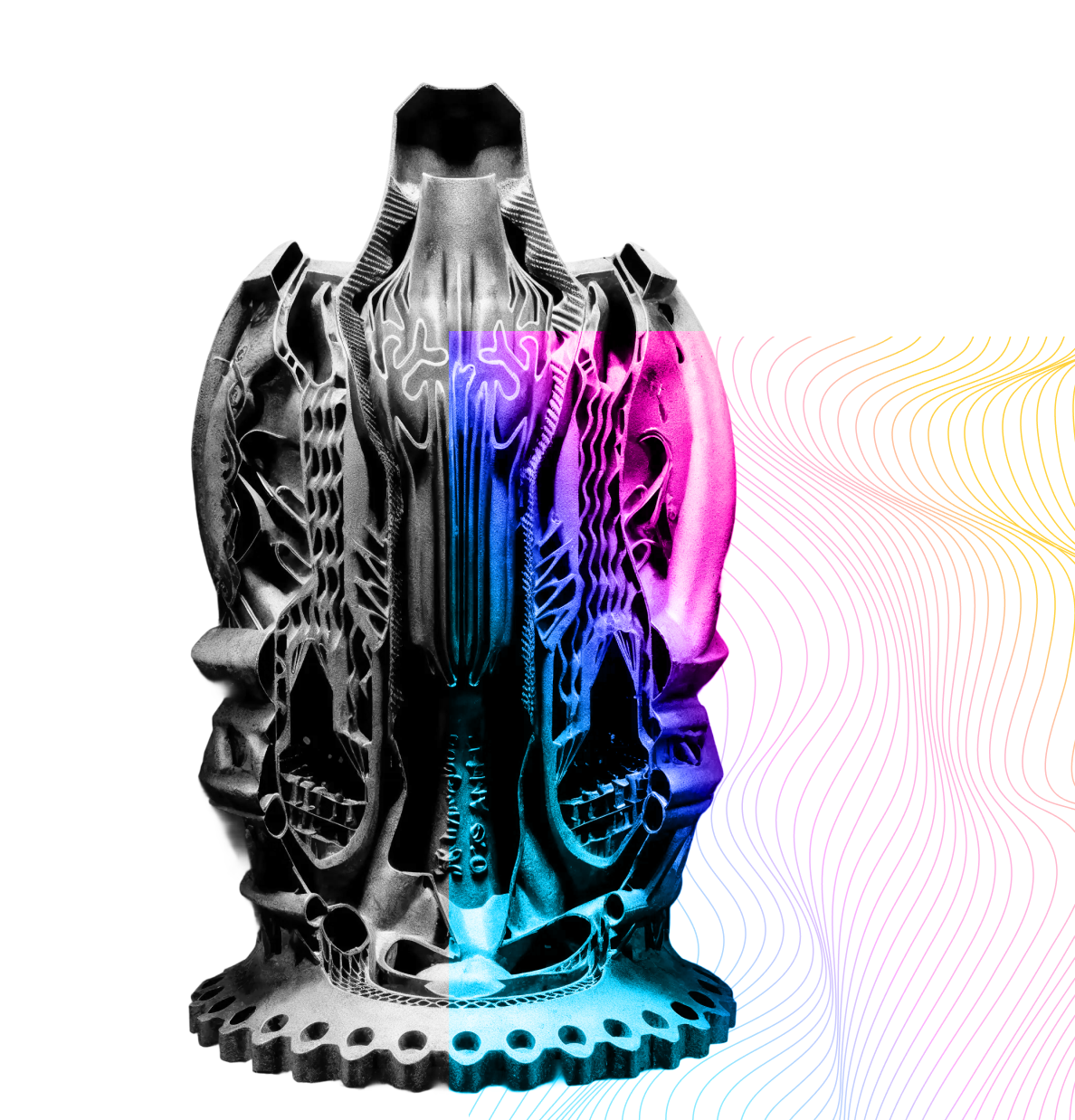
A mechanical robot head with intricate internal components and colorful digital accents, set against a plain white background with colorful abstract lines.

AMERICA LOST THE ABILITY TO MAKE CRITICAL METAL PARTS

The Problem

  • Traditional metal manufacturing relies on tooling, queue-based suppliers, and overseas capacity. Critical parts take months, not because they’re hard to make, but because the system is slow by design.

  • Powder-based and subtractive processes discard a significant portion of raw material. For high-value and refractory metals, waste isn’t just inefficient, it’s economically and strategically unsustainable.

  • Many additive and forged parts require extensive secondary operations to meet tolerance and strength requirements. That added time erodes any speed gained during production and delays deployment.

  • Advanced alloys and refractory metals like tungsten, molybdenum, and Inconel are difficult or impossible to manufacture at scale using conventional methods. As a result, the most critical materials remain constrained, expensive, or sourced abroad.
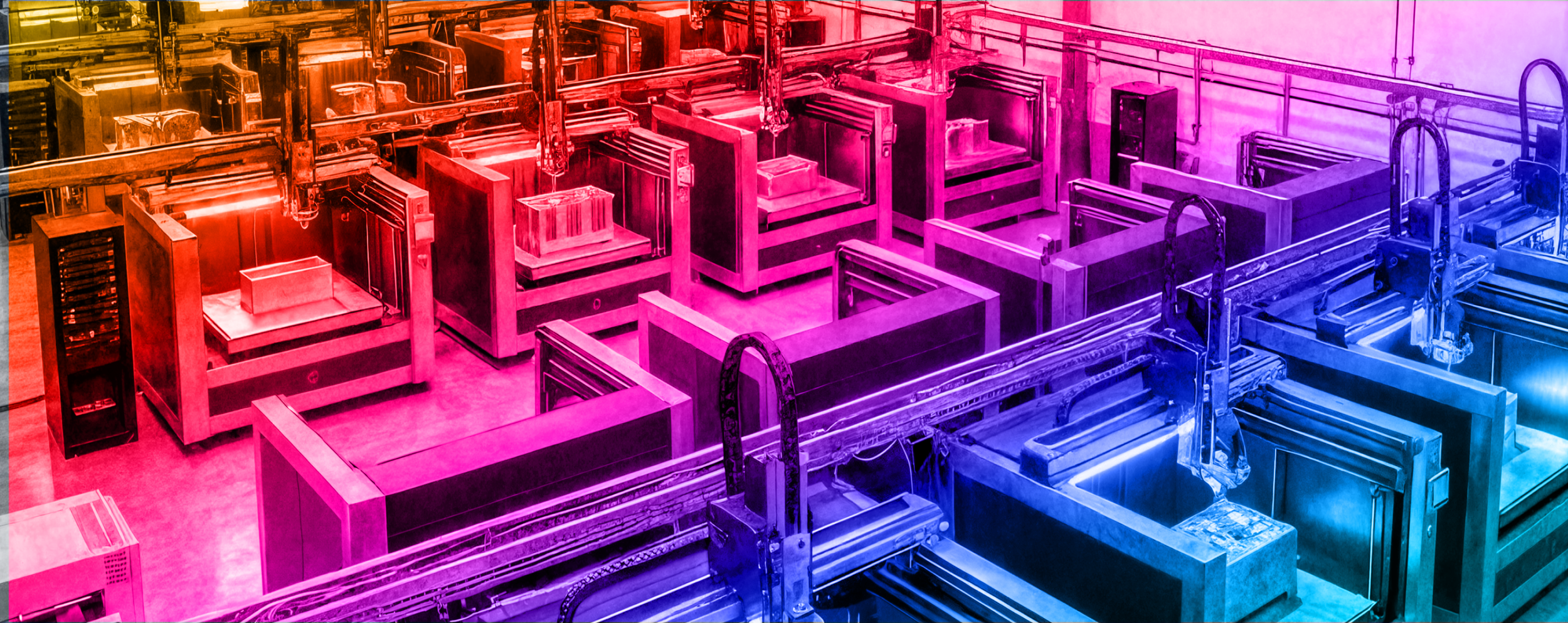
SAy it can’t be done

We are restoring the ability to build. at scale.

From conventional alloys to refractory metals, we can print what others say can’t be done.


We manufacture across the full spectrum of metals, including refractory materials which have extremely high melting temperatures. Our platform can create parts from metals that were previously impossible, enabling production at scale where traditional methods and additive systems fall short.
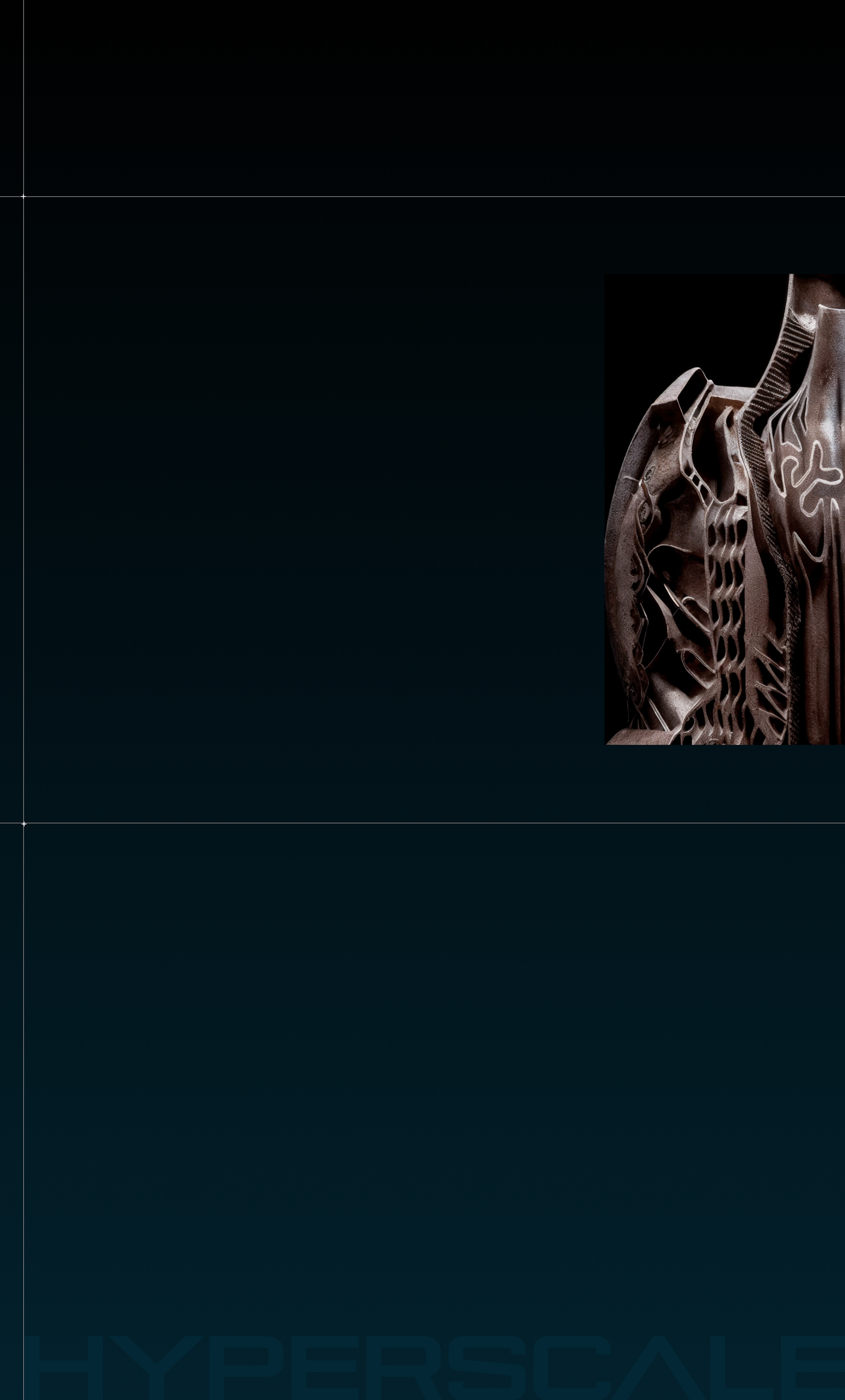
CAPABLE OF PRINTING
REFRACTORY METALS

Materials that powder AM physically cannot process. Materials that traditional forging takes 12-18 months to deliver. We build them in days.
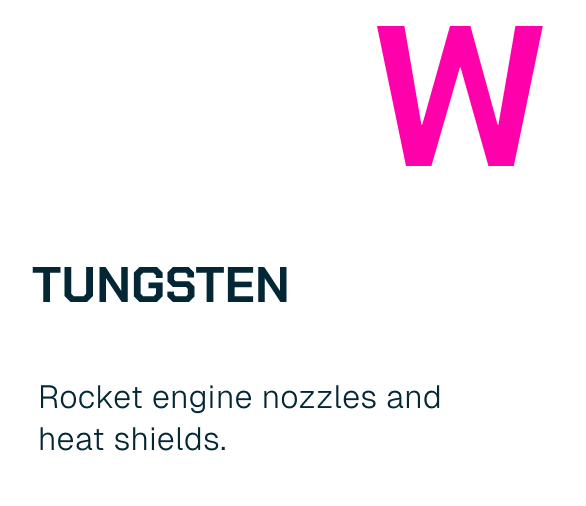
Text describing tungsten as a material used in rocket engine nozzles and heat shields, with a large pink letter W in the top right corner.
Information about the element Niobium (Nb) indicating it maintains structural integrity in rocket and jet engines at high temperatures.
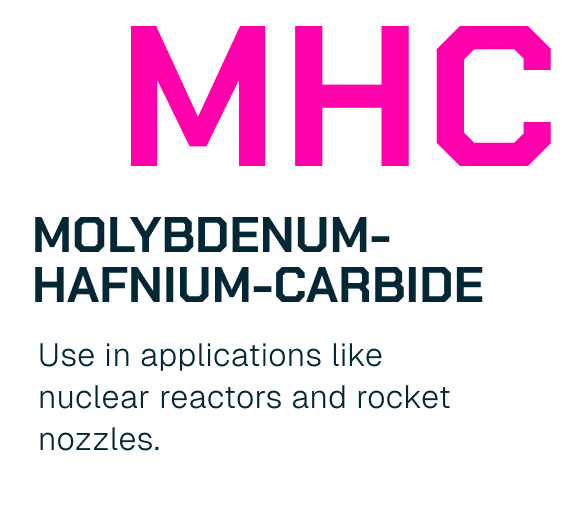
Graphic showing the chemical compound MHC, molybdenum-hafnium-carbide, used in nuclear reactors and rocket nozzles.
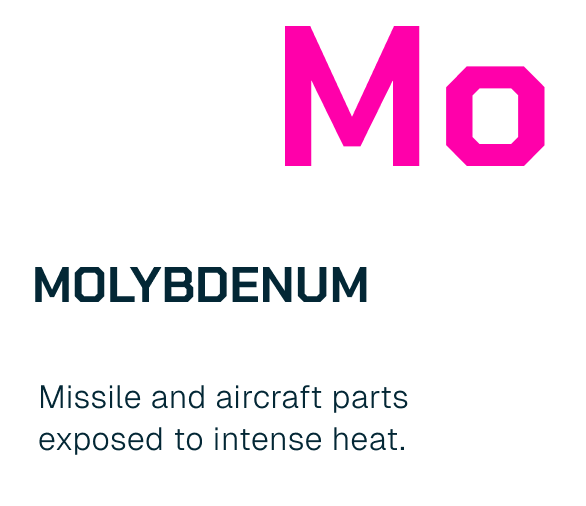
Text reading 'Mo' in large pink font, followed by 'Molybdenum' in bold, and a description 'Melt and aircraft parts exposed to intense heat.'
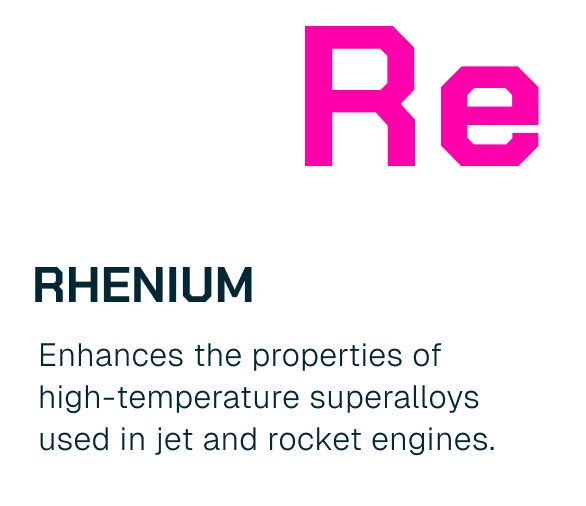
Text explaining rhenium enhances high-temperature superalloys used in jet and rocket engines, with, Re, in pink at the top.
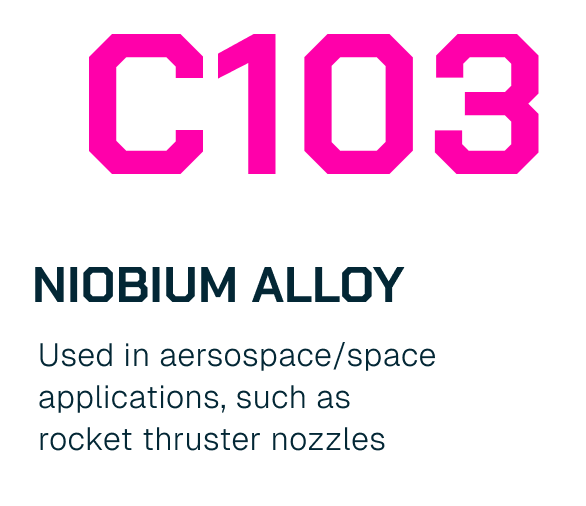
Sign showing C103 niobium alloy for aerospace applications, including rocket thruster nozzles.
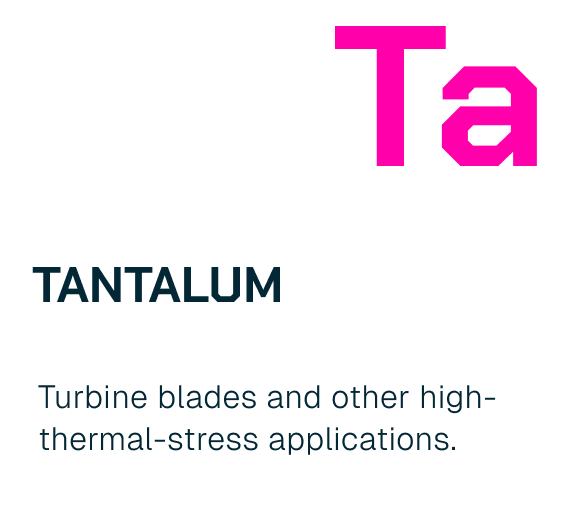
Text on a book cover with a pink and magenta title and black subtitle that reads 'Tantalum' and 'Turbine blades and other high-thermal-stress applications.'
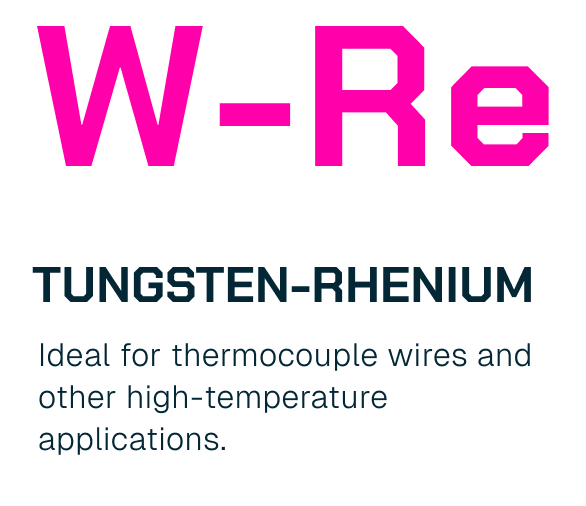
Text displaying a product named W-Re Tungsten-Rhenium, suitable for thermocouple wires and high-temperature applications.
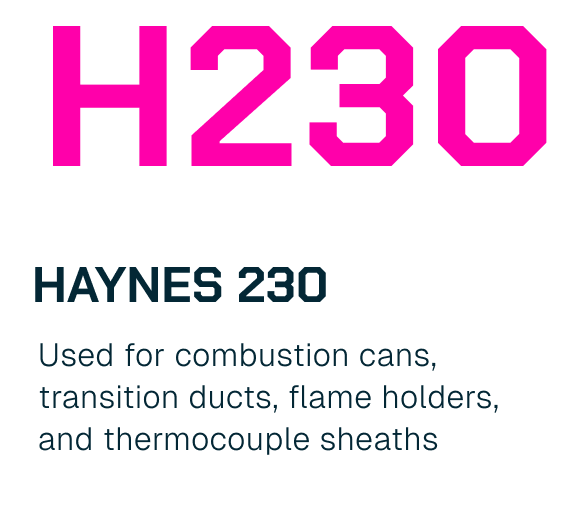
Image showing the label for HAYNES 230, a material used for combustion cans, transition ducts, flame holders, and thermocouple sheaths. The label has a pink header with the text 'H230' and a description below in black text.

[ APPLICATIONS ]

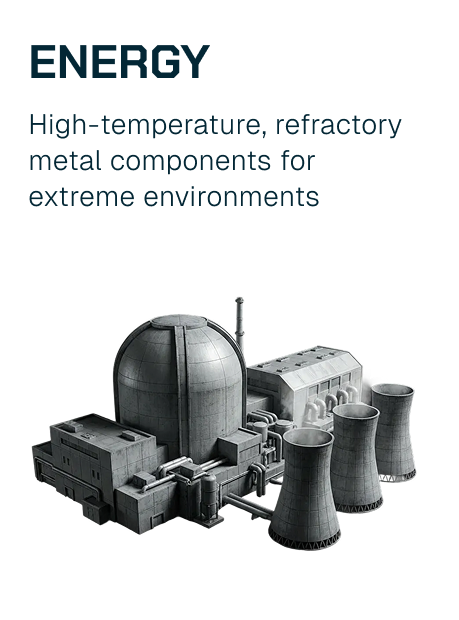
Image of a nuclear power plant with cooling towers and reactor building, illustrating high-temperature, refractory metal components for extreme environments under the theme 'Energy'.

DUAL-USE CAPABILITIES

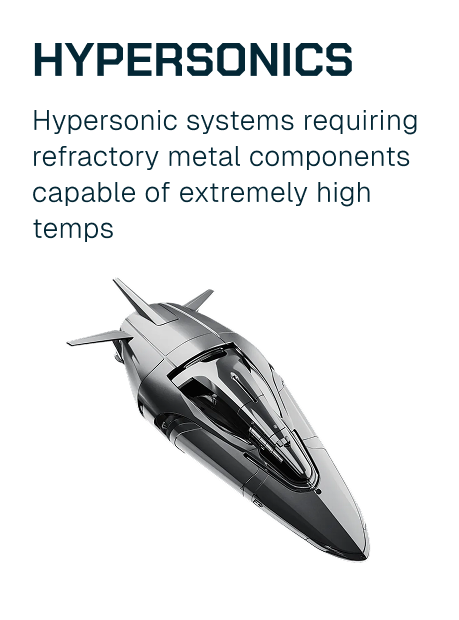
Information about hypersonic systems requiring high-temperature refractory metal components, with an illustration of a sleek, futuristic aircraft.
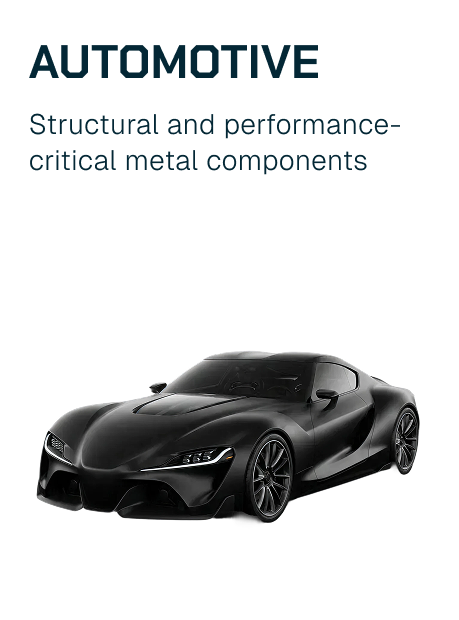
Cover page with the title 'Automotive: Structural and performance-critical metal components' and an image of a black sports car.
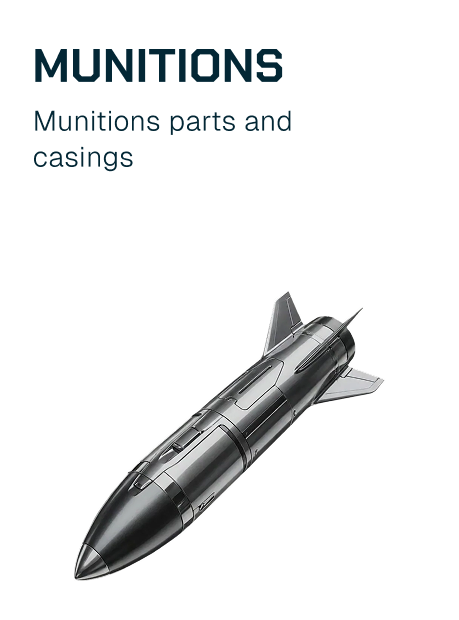
A booklet cover titled 'MUNITIONS: Munitions parts and casings' with a picture of a modern, black missile or rocket.
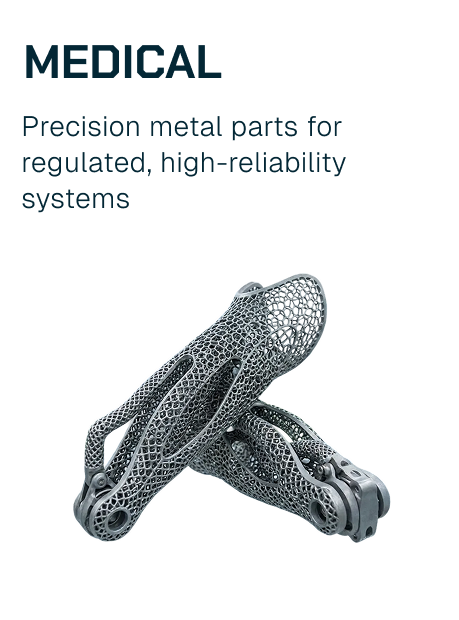
Image shows medical precision metal parts for high-reliability systems, featuring intricate, lattice-like designs.
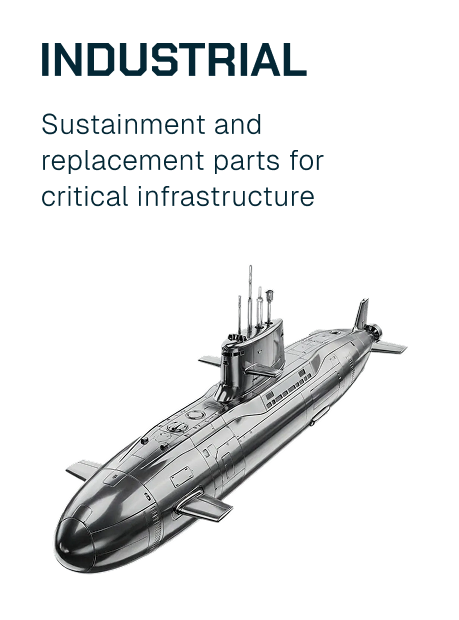
A brochure cover titled 'INDUSTRIAL' with a subtitle about sustainment and replacement parts for critical infrastructure, featuring an illustration of a submarine.
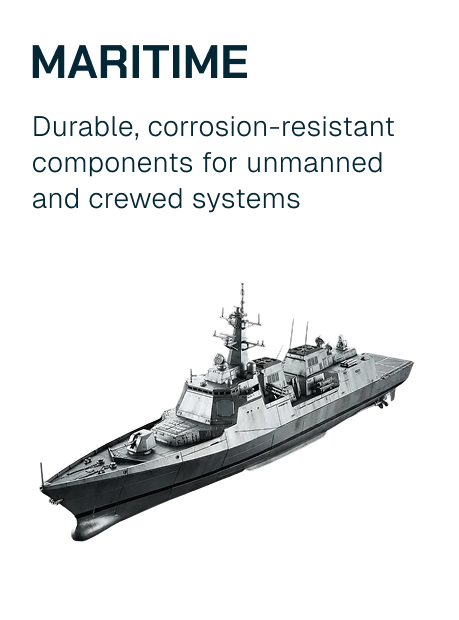
A naval ship with military equipment, used for maritime defense, depicted on a promotional flyer for durable, corrosion-resistant components for unmanned and crewed systems.
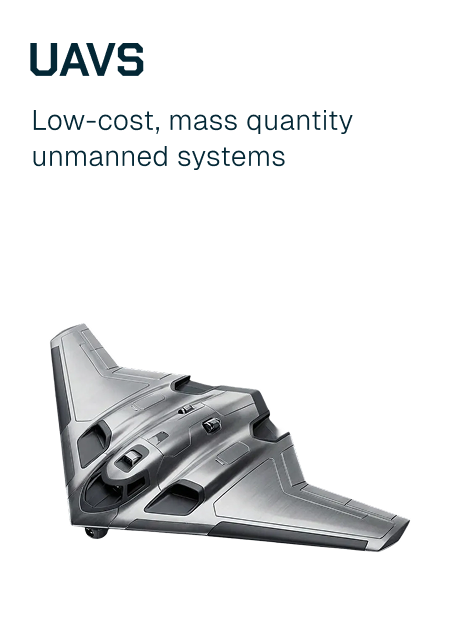
Brochure cover featuring a drone with the title 'UAVs' and the subtitle 'Low-cost, mass quantity unmanned systems'.
Image of a stealth aircraft from above with text overlay related to aerospace flight-critical components.
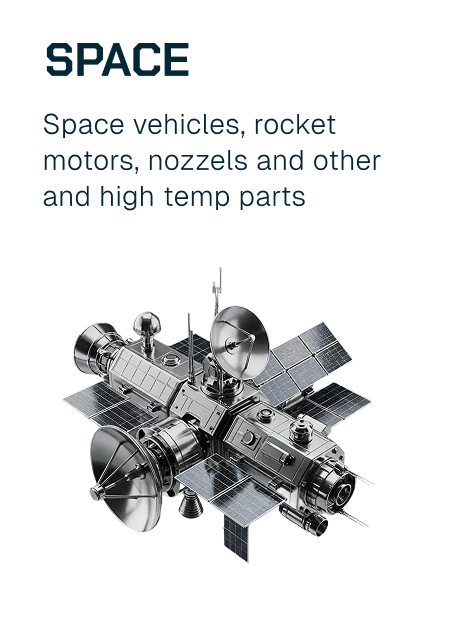
Illustration of a space station or spacecraft with solar panels and antennas, labeled under 'Space' with description of space vehicles, rocket motors, nozzles, and high-temperature parts.

Speed Is No
Longer Optional

HOW IT WORKS

Waiting 12–18 months for critical parts is no longer acceptable. Hyperscale compresses timelines without introducing risk.

A website interface for Hyperscale with a large 3D-rendered robotic sculpture in black and pink, and a section showing an upload box for design files with drag-and-drop functionality.

Step 1

Upload Design

Send your CAD file. Any standard format. Secure portal.


Step 2

Proprietary wire-DED technology. Materials others can't touch. Full digital traceability built in.

We Manufacture


Step 3

Receive Parts

Days, not months. Complete digital birth certificate. Every parameter recorded.


[ why we exist ]

The word 'TRUEBLUE' written vertically in blue text.

We empower YOU
to manufacture
what matters. At scale.

Let’s Build What Others Can’t

Tell us about your program, part, or challenge.
We’ll show you what’s possible.

A blank white background with the text 'CONTOUS' vertically aligned on the left side.